by Cassandra Balentine
Large/enterprise clients benefit from single sign on (SSO) for secure access to a web to print (W2P) system. SSO is enabled to handle user identity authentication.
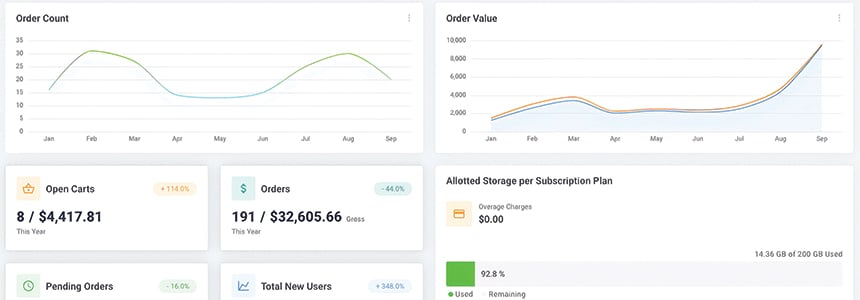
Above: Aleyant’s Pressero features two options for customers to access W2P storefronts using SSO.
With SSO tools, when an employee clicks a printer’s catalog icon inside of a procurement/supply chain management system, a secure token authenticates them automatically with no manual login required.
Further, W2P systems are able to integrate additional options like PunchOut solutions to better handle ecommerce transactions.
With the availability of these advanced tools within W2P systems, print buyers are able to easily customize applications like business cards or collateral on a W2P storefront. Then, instead of entering a credit card, clicking “checkout” pushes the itemized cart, pricing, and specifications back into the buyer’s corporate ERP system to route for manager approval and purchase order generation.
Easing Procurement
“SSO is the piece that makes W2P usable inside a large procurement environment in the first place,” admits David Graves, CEO, Aleyant.
“Enterprise buyers do not log into a print storefront as a standalone destination, they arrive through their existing procurement or intranet portal, already authenticated. If a W2P platform cannot honor that session, the print storefront becomes one more set of credentials for a purchasing agent to manage, which is exactly the kind of friction enterprise IT and procurement teams are trying to eliminate,” adds Graves.
The real value of SSO is not eliminating another password, it is preserving the user’s business context as they move into the print workflow, offers Dmitry Sevostyanov, CEO, Customer’s Canvas.
“SSO removes the need for a second login when a buyer is already authenticated inside their own procurement system, which is often the deciding factor in whether corporate users actually adopt a supplier’s PunchOut catalog instead of reverting to manual purchase orders or email ordering,” explains Alex Bowell, managing director, Infigo Software.
Pablo Jaramillo, product manager, MarketDirect StoreFront, CAI Software, admits that this matters more every year on the security side. Credential-based attacks keep rising, and a separate login is one more password for IT to secure and revoke when someone leaves. “With SSO, a print portal rides on the client’s existing identity system, so onboarding a new employee is instant and off boarding is automatic, no orphaned account left behind. Asking a Fortune 500 buyer to skip that and manage a separate login is a hard sell.”
Centralized authentication gives the buying organization’s IT team control over user access from their own identity system, “so when an employee joins or leaves the business, their access to every connected supplier is managed in one place rather than in each supplier’s individual storefront,” agrees Bowell.
Because SSO removes the friction of managing separate usernames and passwords, Ayelet Szabo-Melamed, VP, marketing, XMPie, says the result is that ordering print feels like a natural part of the organization’s existing workflow rather than a separate process. “Users get a simpler experience, while IT and procurement teams get the security, control, and compliance they’re looking for.”
In a well-integrated workflow, Sevostyanov explains that employees should be able to move from the company’s procurement environment into print personalization without feeling that they have entered an unrelated system.
Growing Demand
The demand for SSO and other eprocurement processes is accelerating in W2P.
Graves sees a shift over the last couple of years. “It used to be a request that came almost exclusively from print providers serving Fortune 500 accounts. Now we are hearing it from mid-size commercial printers who want to win a single large healthcare system, university, or government account, and that one account requires SSO and PunchOut as a condition of doing business at all.”
Szabo-Melamed agrees, noting that procurement integration is increasingly a competitive requirement. “Suppliers that cannot support these workflows may find themselves excluded from consideration before discussions about print quality, service levels, or pricing even begin. This trend was one of the primary drivers behind XMPie’s partnership with TradeCentric.”
“SSO/PunchOut is one of our best-performing modules among enterprise customers. The driver isn’t primarily convenience; it’s security and IT governance,” comments Bowell.
Jaramillo admits that print providers chasing enterprise accounts run into procurement requirements as a gate, not a preference. “No SSO or PunchOut often means no RFP invitation at all.”
Sevostyanov says the conversation is shifting from “Can you give us an online ordering portal?” to “Can print become part of the procurement environment we already operate?”
For larger organizations, Sevostyanov acknowledges that introducing another standalone purchasing system can create friction. They increasingly expect suppliers to fit into established procurement and approval processes. “As a result, integration capability can move beyond being a W2P feature and become part of qualifying for, winning, and retaining an enterprise account.”
Enterprises have spent years digitizing procurement processes and increasingly prefer suppliers that can transact through approved purchasing workflows. “Procurement teams want visibility, compliance, spending controls, and automation, while end users want a modern buying experience,” shares Szabo-Melamed.
Driving Demand
Several trends affect the demand for modern eprocurement solutions.
Graves lists procurement consolidation, compliance and audit pressure, decentralized buying inside of large organizations, as well as labor and staffing pressure as key drivers for eprocurement optimization within W2P.
Sevostyanov feels that enterprises are centralizing procurement and governance, while the actual creation and ordering of branded materials is becoming more distributed.
Companies are pushing more spend categories through centralized, eprocurement platforms to get visibility and control. “As more categories move that way, print either integrates or gets treated as an exception process, which buyers actively try to eliminate,” points out Jaramillo.
“That creates a specific challenge for print—the organization wants tighter control over purchasing and brand rules without turning every local request into a manual design or procurement task,” says Sevostyanov.
“At the same time, enterprise buyers increasingly expect suppliers to integrate with the software environment they already use. Together, those trends make connected personalization workflows more important than another standalone W2P portal,” adds Sevostyanov.
Bowell agrees, noting that enterprise IT and procurement teams are tightening control over every external system their employees touch, and centralized identity management has become a baseline security requirement.
“That pressure flows down through the supply chain, and print providers who can’t support it are increasingly excluded from preferred-supplier lists regardless of production quality,” adds Bowell.
Locked In
For print providers serving large and enterprise clients, it is essential to integrate SSO and other eprocurement tools into W2P to create a seamless and controlled ordering experience.
Nov2026, DPS Magazine