Part three of three
By Cassandra Balentine
Print providers looking to get into or expand packaging must carefully weigh any investment considerations. The question for many is, when does it make sense to have digital and die cutting in house?
For many packaging converters, Matteo Muto, product manager, Summa, says it is not whether digital cutting will replace traditional die-cutting. Rather, it is how both technologies can work together to deliver greater flexibility, faster turnaround times, and improved profitability.
“Companies often start considering a digital flatbed cutter when they encounter recurring challenges around prototyping, short runs, customization, and tight delivery schedules. In these situations, a digital cutting table can complement existing die-cutting equipment and open new business opportunities,” explains Muto.
Accelerating the Prototyping Process
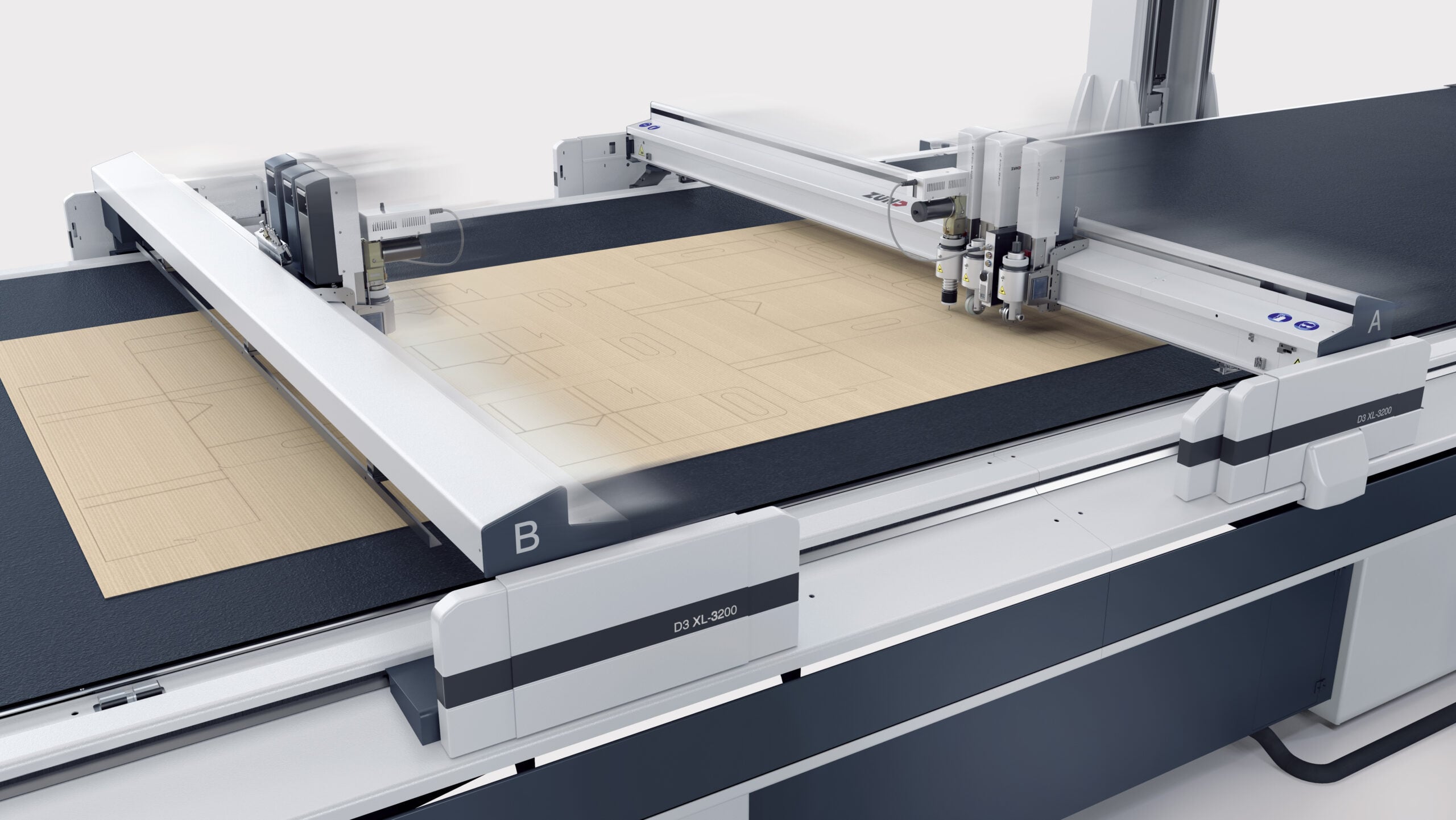
One of the most compelling reasons to invest in a digital cutting system is the ability to create prototypes quickly and accurately. “Packaging designers can transform a digital concept into a physical sample within minutes, allowing customers to evaluate the structure, appearance, and functionality of a package before approving production,” shares Muto.
This dramatically shortens approval cycles and helps brands bring new products to market faster.
Reducing Dependence on Outsourcing
Bringing prototyping and short-run production in house gives converters greater control over quality, scheduling, and costs. Instead of relying on external suppliers for sample production or specialized cutting work, companies can respond immediately to customer requests and maintain complete control over the production process.
“The result is a more agile workflow, reduced lead times, and fewer organizational risks,” stresses Muto.
Eliminating Tooling Constraints
Traditional die-cutting requires the manufacture of physical tooling, making small production runs relatively expensive. Digital cutting eliminates this requirement altogether.
Without tooling costs, packaging producers can economically manufacture exactly the quantity needed, whether that is a single prototype, a dozen samples, or a few hundred finished packages. “This allows businesses to accept short-run jobs that would otherwise be difficult to justify,” shares Muto.
Enabling Greater Design Freedom
Digital cutting empowers packaging designers to experiment with new concepts without being restricted by existing tooling. Structural designs can be modified, tested, and refined rapidly, encouraging creativity and innovation throughout the development process.
“This flexibility is particularly valuable in today’s packaging market, where brands increasingly seek unique consumer experiences and differentiated shelf presence,” adds Muto.
Supporting Just-in-Time Manufacturing
With customer expectations continuing to rise, responsiveness has become a critical competitive advantage. “A digital flatbed cutter enables manufacturers to produce samples, pilot runs, and short production batches exactly when needed,” says Muto.
This capability allows converters to offer pre-delivery quantities, accommodate last-minute design changes, and react quickly to evolving market demands without disrupting larger production schedules.
Complementary Technologies
Muto feels that comparing digital cutting directly with conventional die-cutting can be misleading because the two technologies are designed for different purposes.
Traditional die-cutting remains the most productive and cost-effective solution for large-volume manufacturing. Once tooling has been produced, extremely high quantities can be processed at exceptional speeds and at a very low cost per unit.
Digital cutting, on the other hand, excels when flexibility matters more than volume. It eliminates tooling requirements, supports rapid job changes, and makes short-run production economically viable.
For this reason, Muto explains that many successful packaging manufacturers operate both technologies side by side. Digital cutting handles prototyping, product development, customized work, and short runs, while conventional die-cutting takes over when production volumes reach the point where dedicated tooling becomes financially advantageous.
“Rather than competing, the two technologies complement each other, enabling converters to optimize costs while maintaining maximum flexibility,” says Muto.
Oct2026, DPS Magazine